The Connection Between Health Anxiety and OCD
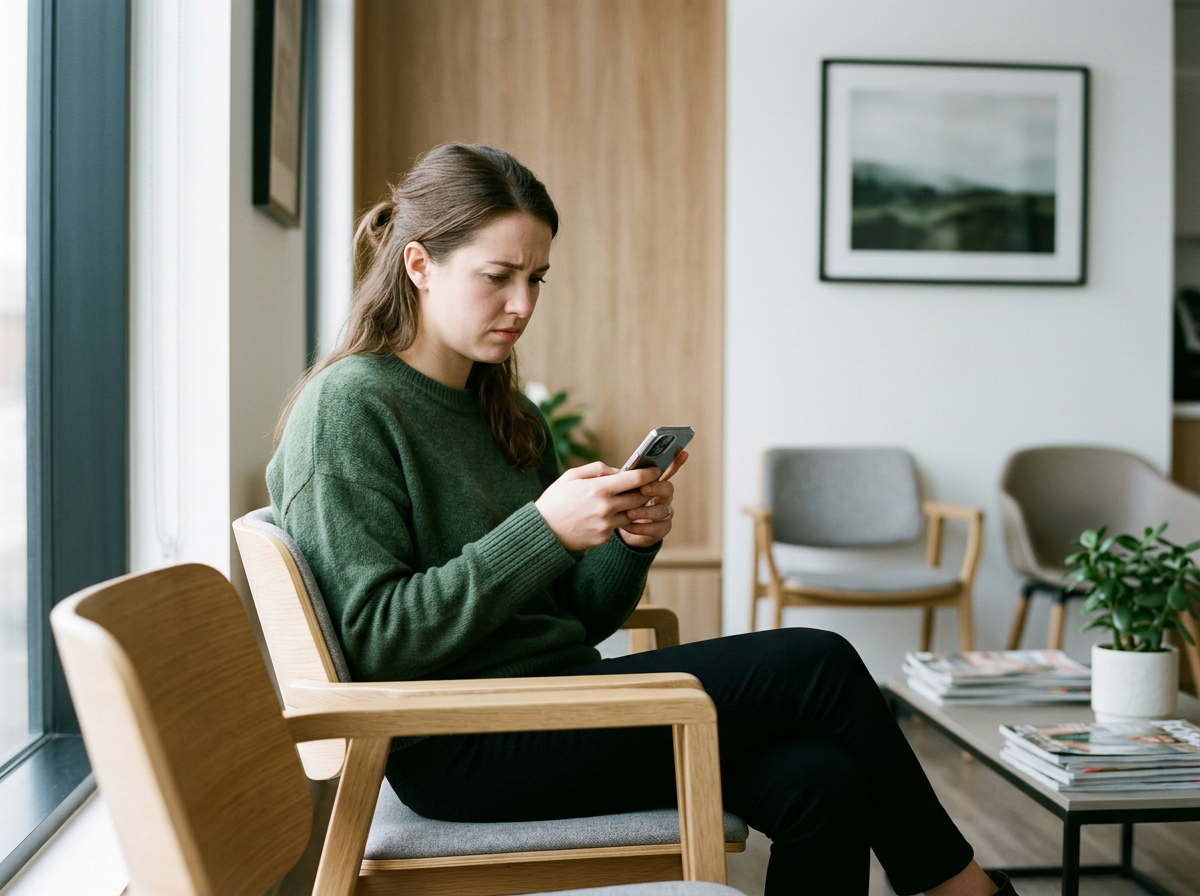
Illness Anxiety Disorder—what used to be called hypochondriasis—is characterized by an intense preoccupation with having or developing a serious health condition.
For someone struggling with health anxiety, a headache isn't always just a headache. A strange sensation, a new pain, a change in heart rate, or something that just feels off can set off an exhausting spiral:
What if something is seriously wrong with me?
What if the doctor missed something?
What if this is the beginning of something catastrophic?
The person may seek reassurance from doctors, friends, or family. They might spend hours Googling symptoms or searching social media for personal accounts of people who had a seemingly harmless symptom that turned out to be cancer or another serious illness.
They may also constantly monitor their body—breathing, heartbeat, temperature, pulse, pain, lumps, sensations, vision, swallowing.
The brain is always scanning the body, looking for signs of danger.
This starts to look a lot like OCD
Officially, Illness Anxiety Disorder and Obsessive-Compulsive Disorder are separate diagnoses. But as an OCD therapist—and as someone who has personally experienced significant health anxiety—I see tremendous overlap in how the cycles operate.
The fear might be:
What if there is something seriously wrong with my health?
Then comes the real fuel for the cycle:
I can't know for certain that there isn't.
That uncertainty creates anxiety. The brain demands an answer.
So we try to get one.
We Google. We research. We ask someone what they think. We schedule another appointment. We check our pulse. We examine the painful area again. We compare today's sensation to yesterday's. We mentally review what the doctor said. We look for reassurance that we're okay.
And maybe, for a few minutes or a few hours, we feel better.
Until the doubt comes back.
Health fear → anxiety → need for certainty → compulsive behavior → temporary relief → fear returns
If you understand OCD, that cycle probably looks very familiar.
I know this cycle because I've lived it
This is the personally vulnerable part for me. I have Illness Anxiety Disorder.
It took me years to understand what was happening to me.
There were periods of my life when fear about my health consumed me from the moment I woke up until I went to sleep at night.
At its worst, it interfered with almost every aspect of my life. I spent endless hours Googling symptoms and researching illnesses. My mood suffered tremendously. There were times when I could barely work. From the outside, it appeared I was functioning.
Internally, I was going through the motions of my life while living in my own personal mental hell.
Because I tend to be an internal processor, very few people knew how much I was struggling. My brain was almost never not thinking about it.
A pain in my shoulder could become:
How likely is it that shoulder pain is actually lung cancer?
And down the rabbit hole I'd go.
I would read and reread webpages. Search symptoms. Find personal stories. Monitor the sensation. Check whether it had changed. On an endless loop every free moment of the day.
And, of course, every time I checked my body, I noticed it more.
The diagnosis that finally made things make sense
At one point while seeking treatment, a psychiatric prescriber mentioned that a primary care doctor had put OCD in my medical chart.
No one had ever actually told me that. And suddenly, so much of my experience made sense.
I began to recognize that the Googling wasn't simply "research."
The reassurance seeking wasn't helping me solve the problem. The constant monitoring of my body wasn't protecting me. These were behaviors I was using to try to obtain something none of us can actually have: absolute certainty about our health.
Once I understood the connection between my anxiety and these compulsive behaviors, I could begin changing how I responded to the fear.
For me, body monitoring has been one of the hardest behaviors to change. Unlike Googling, you can't simply close the browser. Attention happens inside your own mind. Sometimes I realize I've been monitoring a sensation before I've even consciously recognized that I'm doing it.
Medication has also been an important part of my recovery.
Today, when I'm doing well, OCD and health anxiety occupy very little space in my life. That doesn't mean scary thoughts never show up. They do.
Recovery has meant learning that I don't have to answer every scary question my brain asks me.
So, is health anxiety actually OCD?
Technically, no.
Illness Anxiety Disorder and OCD are separate diagnoses, and there are meaningful differences between them. Not everyone with health anxiety has OCD.
But I believe there is enormous value in understanding how OCD principles can apply to health anxiety—particularly when reassurance seeking, checking, researching, body monitoring, and avoidance are keeping the cycle alive.
For me, understanding my health anxiety through this lens was life-changing.
The goal isn't to prove that you're healthy.
Because none of us can have absolute certainty about our health.
The goal is learning that you don't need absolute certainty in order to live your life. Distinguishing between a legitimate health concern that needs to be addressed and a fear driven by illness anxiety is an ongoing part of my own recovery. I've had to learn that taking reasonable care of my health and trying to achieve absolute certainty about my health are two very different things.
It means learning to notice the urge to Google without automatically Googling. To experience a sensation without repeatedly checking it. That constant body scanning is part of the cycle. I am learning to allow uncertainty to exist without immediately trying to make it disappear.
And perhaps most importantly, it means learning that anxiety can rise and fall without performing the behaviors that promise relief but ultimately keep us trapped.
That's where freedom starts.
By Andrea Born-Horowitz, LCSW
Want a little help putting this into practice?
If health anxiety has you caught in a cycle of checking, reassurance seeking, body scanning, or trying to figure out whether a symptom is really something to worry about, I created a free resource to help.
Subscribe to my email list and I’ll send you my free Health Anxiety handout. It’s designed to help you recognize when health anxiety may be taking over—and think differently about how you respond when uncertainty about your health shows up.
You’ll also receive occasional practical resources and updates about anxiety and OCD from Mind Journey Therapy.