Are You Helping Your Child's Anxiety… or Accidentally Strengthening It?
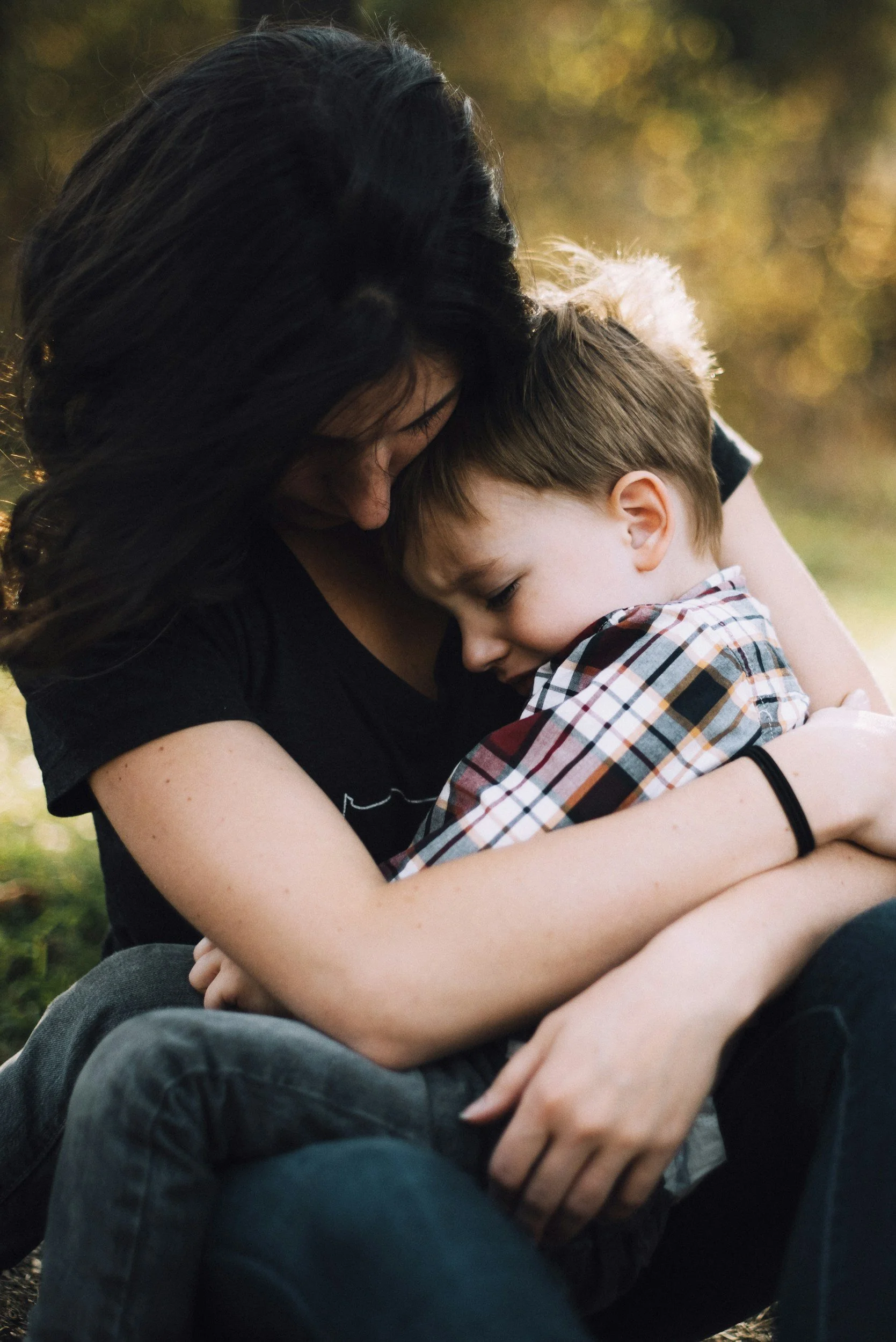
It's been on my mind to write this blog post for quite some time.
As my work treating anxiety disorders and OCD continues to grow, I've become increasingly aware of one area where many parents need support: understanding how accommodations can unintentionally keep childhood anxiety going.
Although I've never felt particularly drawn to treating children in my clinical practice, I do feel called to help parents. Childhood anxiety disorders are more common than ever, and this isn't just professional for me—it's personal. My own son is prone to anxiety.
While I feel at home working with adults, writing Milo's Mind Monster reminded me that I can still play a role in helping children by helping the adults who love them. My hope is that this blog gives parents practical, evidence-based guidance on how to best support a child who struggles with anxiety.
First, if you accommodate your child's anxiety—you are not alone.
Please don't read this and feel guilty.
We all do it.
Protecting your child from distress is one of the most natural instincts a parent has. We want to make things easier. We want to reduce their suffering. The goal isn't to stop being protective.
The goal is to recognize the difference between protecting your child from genuine harm and protecting them from anxiety itself. Those are two very different things.
Sometimes, when we remove every anxious experience from a child's life, we also remove the opportunity for them to discover something incredibly important:
"I can handle this."
Life will never be free from anxiety.
Our children aren't supposed to grow up without ever feeling anxious. Our job isn't to eliminate anxiety—it's to help them build confidence in their ability to move through it.
As parents, we can offer two things at the same time:
Acceptance of their anxiety.
Confidence in their ability to cope with it.
Those two messages can exist together beautifully.
Here is a recent example in my own family.
On the way to a birthday party recently, my son told me he was feeling really nervous.
It was for a friend from a previous school. He wasn't sure who would be there. What if he didn't know anyone? What if it was too loud? What if he didn't like it? The uncertainty was fueling his anxiety.
There were several ways I could have responded. We could have turned around and gone home.
I could have said, "If you're too anxious, we don't have to go."
As both a therapist and a parent, I knew this was one of those moments that mattered.
Instead, I acknowledged what he was feeling. We talked about where he noticed anxiety in his body. We gave it space instead of trying to make it disappear. Then I told him something I genuinely believed:
"I know this feels scary. And I also know you can handle these feelings."
Notice I wasn't telling him everything would be okay. I wasn't promising he'd have fun. I was expressing confidence in him, not certainty about the outcome.
The outcome wasn't actually the important part
Fortunately, he had an amazing time. I suppose I got lucky. If the party hadn't gone well, he may have been even more hesitant the next time a similar situation came up. But that's actually beside the point.
Recovery isn't built because every experience goes well. It's built because we learn that we can tolerate uncertainty and cope with whatever happens.
The truth is, our anticipation is often much worse than reality.
And even if there had been an awkward moment or two, it probably would have been quickly forgotten once the games and excitement began.
On the drive home I asked him, "Remember how nervous you felt before we went into the party? But you went anyway. What was that like?" We talked about how the anxiety didn't last forever. It came, it stayed for a little while, and then it passed. Even though he felt nervous, he was still okay. More importantly, he learned that he could handle feeling anxious.
That is one of the foundations of inhibitory learning, one of the mechanisms behind exposure therapy.
If success is measured only by whether anxiety disappeared, then every anxious experience feels like a failure. But if success becomes: "I did something important even though I felt anxious," then children begin learning something much more powerful:
"I can do hard things. I can cope. Anxiety doesn't get to make all of my decisions."
Of course, I don't tell my son we're working on inhibitory learning. I just ask questions that help him notice his own ability to move forward despite it.
A final thought
This post isn't meant to make anyone feel guilty.
And it certainly isn't meant to suggest that because I'm a therapist, I handle every anxious moment with my son perfectly.
I don't.
Sometimes I offer too much reassurance.
Sometimes I let him off the hook.
Sometimes I wish I had responded differently.
Parenting doesn't require perfection.
It requires showing up, learning, and trying again.
If there's one thing I hope parents take away from this post, it's this: Your child doesn't need you to convince them they won't feel anxious.
They need you to believe they can handle feeling anxious.
That combination of acceptance and confidence is one of the greatest gifts we can give our children—not just for today, but for the rest of their lives.
By Andrea Born-Horowitz, LCSW